How to paint a cement floor
collections, how to's, how-to projects
The other day, I drove into Kansas City to spend the day with Beth. Whenever I go to her house, I always start peeking around to explore her latest finds. I had some time to kill while she finished something up, so I entertained myself by poking through her stuff. You know you have a good friend when you don't think twice about wandering around her house and making yourself at home.

I could poke around for days and not see it all.
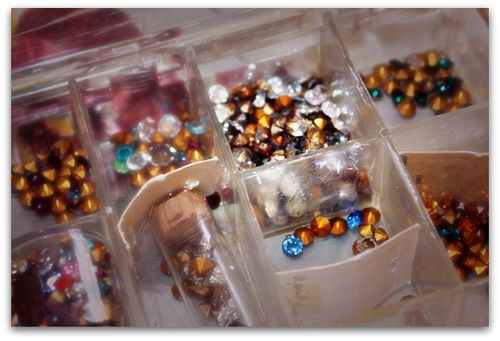
And this isn't even in her craft room. This is a small portion of the stuff piled in the guest room, waiting to be tagged and sold or photographed for Ebay and Etsy.
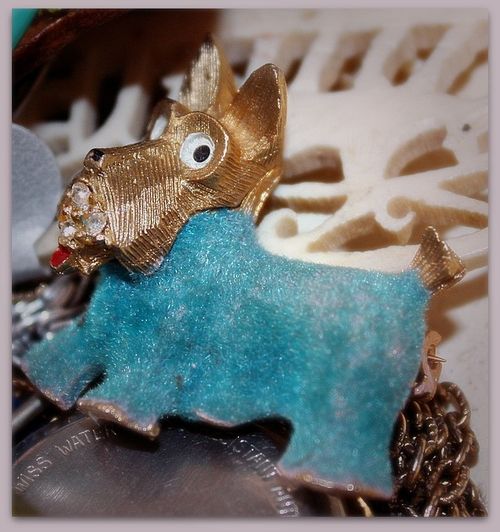
I'm always attracted to doggie brooches and at first really liked this one. Then I took a closer look, what is going on with the poor creature's mouth? No wonder his eyes are popping! But still cute.
I like the blue fur. I think this dog has been flocked.
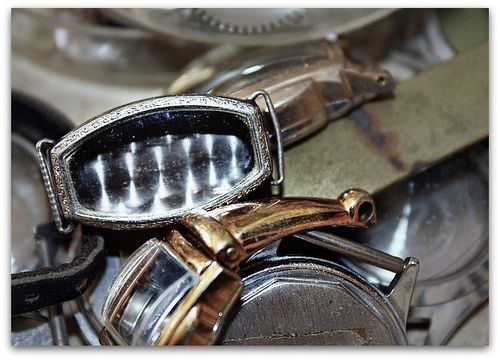
This is a pile I could really delve into. Can't you picture a collage in that old watch? It could be like a mini shadow box.
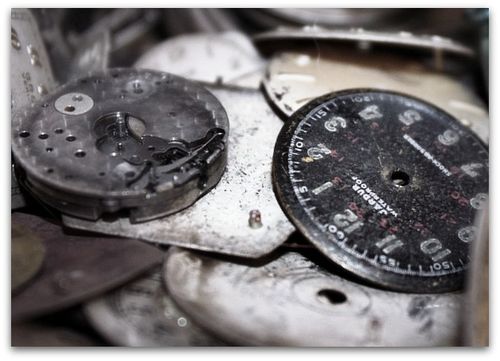
Recently she hit pay dirt at an auction and got a lot of watch bits and pieces. Hmmm…. if I invited myself over for a craft day, I wonder if she'd let me play with some of them?
Beth and I are driving to Texas together for Paper Cowgirls in June and are trying to figure out if we have enough space in the car to take along stuff to sell on vendor night. We'd share a table, so wouldn't need a lot of inventory each. Heck, if she just threw a couple of these boxes from her guest room into the back of the car, the shoppers would be thrilled.
We both drive Scions and they are shaped like a little box on wheels, so have lots of space in them for a small car. But by the time you pack suitcases, tools for the classes, my class kits, etc., things do start to fill up.
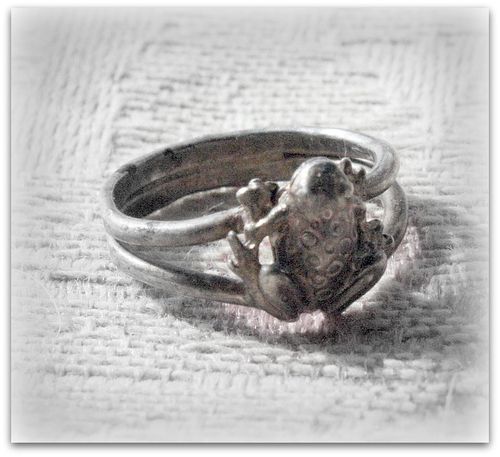
I think that we can make a couple of tubs of vendor goods each fit into the car though. I'd want to take some millinery flowers and wallpaper packs. Not anything that takes up much space.
Guess what!? My class at Paper Cowgirls is filling! The site has it marked as full, but there is actually a space or two left due to some sort of paypal button error. So, if you tried to sign up for my class but didn't get in, let me know and I'll see if there is a spot still there.
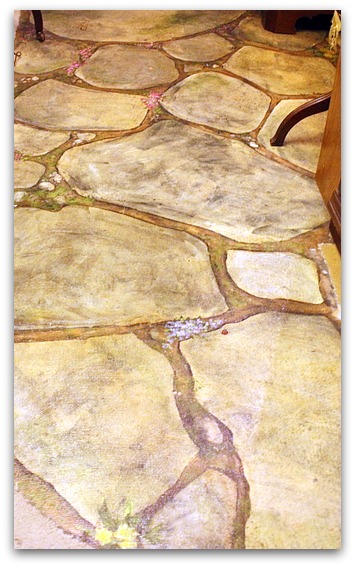
The reason why I went to Beth's in the first place was to help her with her booth at Mission Road Antique Mall. Years ago, that is where we met- we were neighbors with booths across from each other. Then, we started to share spots as well as each having a place of our own there too.
I was pleased to see that my old booth still had the hand painted floor that I did.
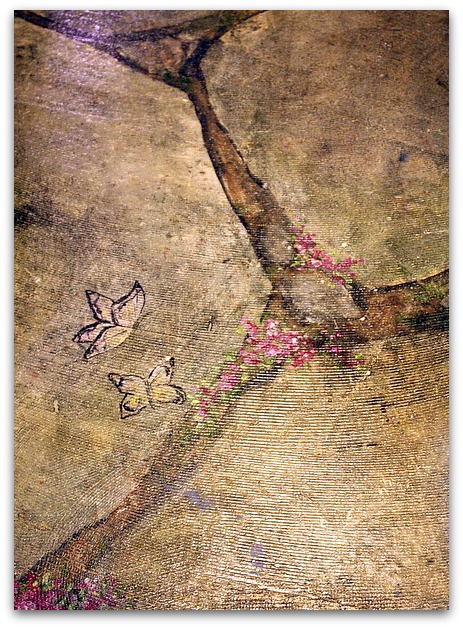
The mall owner let me pull up the carpet in my space and paint over the concrete below. I've done this in homes too, back when I was a full time painter. I've also tried this look on wooden floors and used the same steps. One area that did NOT work was an outdoor patio. And that was because of the temperature fluxuation here in Kansas. The winter freezing and summer heat, caused contracting and expanding that ruined the paint job.
Here is how I do it:
- Cut the carpet in strips with a box cutter. Change the blade often, a dull blade makes the job much harder. Pull up the carpet.
- After the carpet was gone, I cleaned the space well, getting up any fuzzies left behind from the rug. I didn't bother to sand down the glue marks, I just painted right over them. I kind of like the texture it gives the floor.
- Before painting, always use a good bonding primer. Bonding is the key! Not just Kilz. You have to always read the labels, there are a lot of primers out there and they are made for different uses. A bonding primer lets you paint right over any surface without sanding and allows your paint to adhere and grip where you want it to. Look for the words "bonding" or "will stick to glossy surfaces". I prefer water based primers such as Glidden Gripper.
- I painted the cleaned floor with a base coat of latex house paint, over the primer, and then did the art work with acrylic craft paints. I used a dark brown for the base, and a sponge roller to create the stone texture in lighter colors over it. Then splatter painted over the rocks before adding the details.
- Top it with polyurethane. For the top coat, make sure you have plenty of ventillation, and stay off of the floor for a couple days.
As you can see, this floor has held up great, and it has been there for years, surviving shoppers and lots of furniture being moved around over it.
Here is a link to one of my very early posts, with another cement floor tutorial in it, complete with the arty steps:
Pond Scene on Guncle Randy's floor